
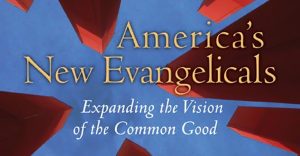
 Though public support for both major political parties is very low, one group of voters is usually exempted from this malaise: evangelicals. It’s assumed that at least these “values voters” are getting what they want. But we should look more carefully.
A sizable portion of evangelicals have left the right, so to speak, in what the theologian Scot McKnight called “the biggest change in the evangelical movement, ” nothing less than the emergence of “a new kind of Christian social conscience.” These new evangelicals focus on economic justice, environmental protection and immigration reform — not exactly Republican strong points. The religious right remains a potent political force, but where once there was the appearance of an evangelical movement that sang out in one voice, there is now a robust polyphony.
In numbers, that means Christians who don’t think of themselves as part of the religious right come to roughly 24 percent of the population, according to the Pew Forum on Religion and Public Life. Subtract the Catholic left and you’ve got some 19 percent of the population distributed among the ‘60s evangelical left; younger, emergent progressive churches; and red-letter Christians, who focus on Jesus’ words in scripture (printed in red) and who lean towards progressive activism. Others have quietly broadened the activism associated with the religious right.
These “new evangelicals” are quick to say (correctly) that all this is not new but consistent with tradition. Evangelical emphasis on individual moral responsibility made them, from the colonial era to World War I, politically anti-authoritarian and economically populist — anti-banker and anti-landlord. Before the Civil War, they created many of the associations that helped build the country and, in the North, were crucially important to the abolitionist movement. After the war, they fought for labor against robber-baron capitalism and supported William Jennings Bryan three times for president on a pro-worker, pro-farmer platform. Even the Fundamentals pamphlets, circulated between 1910 and 1915 as a conservative call to evangelicals, included a section on the benefits of socialism.
In the 20th century, evangelicals became associated with the right, especially after World War II. So why another shift in the 21st? One reason is generational, with idealistic youth rejecting the politics of their parents. Another is that views about sex, the environment and global connectedness have shifted nationwide, including among evangelicals. In their self-critique, “Unchristian, ” evangelicals David Kinnaman and Gabe Lyons title their chapters: Hypocritical, Sheltered, Too Political, Judgmental and Anti-homosexual. Ouch.
In a group that takes ethics seriously, still another reason for the change is new thinking about what matters most. The cavalier militarism and the justification of torture during the Bush years, along with the strident in-group-ism of the last four decades, prodded many evangelicals to re-examine themselves and their actions. George W. Bush may have fractured the Christian coalition that elected him.
Richard Cizik, president of the New Evangelical Partnership for the Common Good, describes the movement as a “slow earthquake.” A developing grassroots movement won’t have one overarching policy position, but the new evangelical concerns collect in a few areas. One is an embrace of church-state separation. “Let it be known unequivocally, ” declared the 2008 Evangelical Manifesto, signed by over 70 evangelical leaders, “we are firmly opposed to the imposition of theocracy on our pluralistic society.”
Another is participation in civil society through public education, lobbying and coalition-building. New evangelicals have been working through their churches on substance abuse, care for the homeless and the elderly, prison ministries, and affordable housing, and they have been developing projects overseas on environmental protection, disease reduction and education.
These programs, which have some overlap with those run by the religious right, are staffed largely by volunteers, who raise much of the money to fund them as well. But forget bake sales. These are sophisticated operations, expertly run NGOs really, based on nuanced policies and listening to others. The point here is not only alms-giving but the restructuring of opportunity through education, health care and job training.
A third concern is critique of government. Since all governments are human and therefore corruptible, new evangelicals understand the vigilance needed to keep politics honest. This is the church’s “prophetic role” — not to become the government but to “speak truth to power.” Recently, the National Association of Evangelicals called on its members — over 40, 000 churches — to protest Republican cuts in programs for the needy. “Approximately one percent of the federal budget is devoted to helping the poorest people around the world, ” one call for advocacy in the organization’s legislative action center began.
“In 2011, our international assistance budget was cut by 11 percent. For 2012, the House of Representatives has recommended a further 30 percent reduction. While saving money and reducing the federal deficit is very important, this is the wrong place to cut. We did not get into the fiscal mess we are in by spending too much on the world’s poor.”
Evangelical concern about Republican policies has been evident for some time. In 2006, over a quarter of white evangelicals (27 percent) voted Democratic in the midterm elections — and nearly 40 percent of evangelicals who attend church less than once a week. In 2008, there were evangelical PACs working for Obama, and once again over a quarter of white evangelicals voted Democratic (34 percent of less frequent church-attenders). Obama earned nearly a third of the votes of white evangelicals under 30 years old, regardless of church attendance.
This growing political independence poses a conundrum. On the one hand, opposition to abortion along with their traditional preference for self-reliance has made evangelicals a Republican bloc. But if the new evangelicals are less suspicious of Mormonism, they might be less put off than the religious right if Romney heads the Republican ticket. At the same time, their support for economic justice and environmental protection strains their allegiance to the Republican party.
When Rudolph Giuliani was still a contender for the Republican nomination in 2008, Richard Land, president of the Southern Baptist Convention’s Ethics and Religious Liberty Commission, pointed out that if abortion were taken “off the table, other issues would get oxygen, issues where evangelicals are not nearly as certain that Republicans offer the best answer.”
In the meanwhile, our 19 percent — that’s a lot of votes — don’t have a candidate they love: someone who will help the poor, protect the planet, and dramatically reduce the need for abortion, someone who will help both secular and faith-based organizations to do this work. That’s a political void, and those are votes that are up for grabs.
The impact of new evangelicals, however, goes beyond voting. The real work of politics happens not during elections but between them when policies are developed and when groups lobby their representatives and run their own programs that change the way we live. Even if most new evangelicals remain Republican, were they to move the party toward economic justice, immigration reform and environmental protection, that would be a very large achievement.
—-
Marcia Pally is the author of The New Evangelicals: Expanding the Vision of the Common Good. In addition she teaches at New York University in Multilingual Multicultural Studies and is a permanent Fellow of the New York Institute for the Humanities. In addition to her academic work, Professor Pally has been a columnist in the U.S. and Europe for over 20 years.
This article originally appeared in the New York Times Opinion Pages
